
1 / 1
Book
AED 50
Item Details
Type
Paperback
Age
Brand New
Condition
Perfect inside and out
Usage
Still in original packaging
Posted on: 18th December 2025
Description
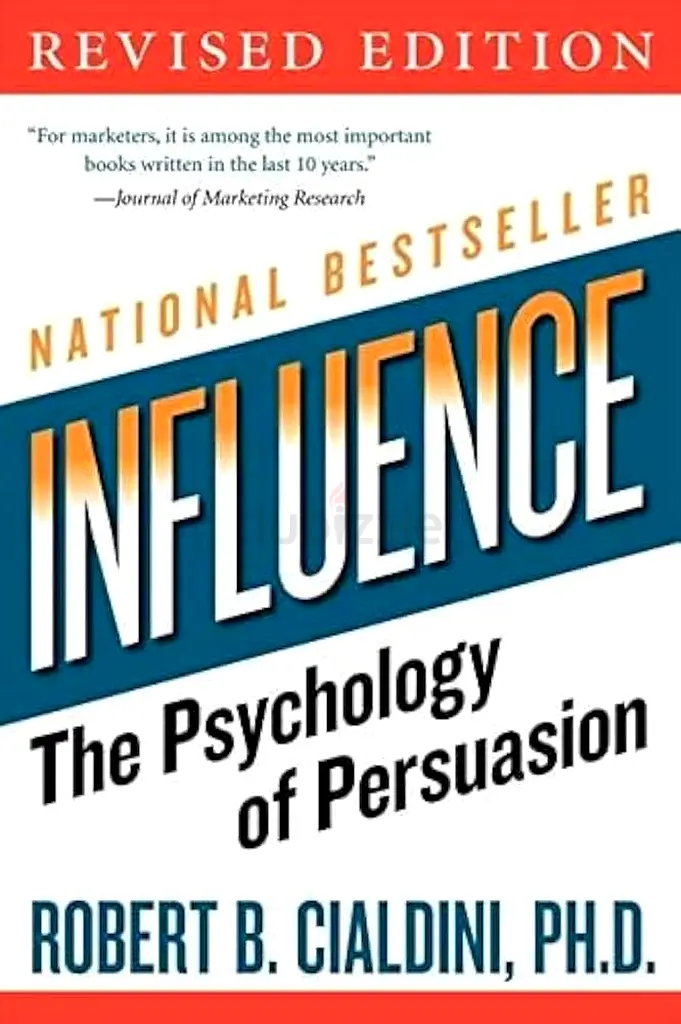
Influence: The Psychology of Persuasion by Robert Cialdini explains how people are convinced to say "yes" using six universal principles: Reciprocity (give to get), Commitment & Consistency (sticking to past choices), Social Proof (following the crowd), Liking (favoring familiar/attractive people), Authority (obeying experts), and Scarcity (wanting what's rare). These work by tapping into our mental shortcuts (heuristics) for faster decisions, but can be exploited, so understanding them helps both persuade ethically and defend against manipulation in sales, marketing, and daily life.
The Six Principles of Persuasion
Reciprocity: We feel obliged to return favors, gifts, or concessions. Giving something first (a free sample, a mint) makes people more likely to comply.
Commitment & Consistency: People want to be consistent with their past commitments, especially public or effortful ones. Getting a small "yes" first (foot-in-the-door) leads to bigger agreements later.
Social Proof (Consensus): We look to others to determine what's correct, especially in uncertain situations. "Wisdom of the crowd" (long lines, best-sellers) drives our choices.
Liking: We're more persuaded by people we like, due to factors like physical attractiveness, similarity, compliments, and familiarity.
Authority: We tend to obey credible experts or figures of authority (uniforms, titles, symbols of status).
Scarcity: Opportunities seem more valuable when they are less available (limited time offers, exclusive items), creating urgency.
Core Idea
Persuaders use these principles to trigger automatic, fixed-action patterns (mental shortcuts) in our brains, bypassing careful, deliberate thought. By understanding these triggers, you can become a more ethical persuader and a more discerning decision-maker.
The Six Principles of Persuasion
Reciprocity: We feel obliged to return favors, gifts, or concessions. Giving something first (a free sample, a mint) makes people more likely to comply.
Commitment & Consistency: People want to be consistent with their past commitments, especially public or effortful ones. Getting a small "yes" first (foot-in-the-door) leads to bigger agreements later.
Social Proof (Consensus): We look to others to determine what's correct, especially in uncertain situations. "Wisdom of the crowd" (long lines, best-sellers) drives our choices.
Liking: We're more persuaded by people we like, due to factors like physical attractiveness, similarity, compliments, and familiarity.
Authority: We tend to obey credible experts or figures of authority (uniforms, titles, symbols of status).
Scarcity: Opportunities seem more valuable when they are less available (limited time offers, exclusive items), creating urgency.
Core Idea
Persuaders use these principles to trigger automatic, fixed-action patterns (mental shortcuts) in our brains, bypassing careful, deliberate thought. By understanding these triggers, you can become a more ethical persuader and a more discerning decision-maker.
Location
Rolla Area, Sharjah, UAE

- Accounting / Finance
- Automobile
- Beauty / Salon
- Cleaner / Housekeeper
- Construction
- Cook / Chef
- Customer Service / Call Centre
- Data Management & Analysis
- Design
- Driver / Delivery
- Education
- Engineering
- Event Management & Operations
- Handyman / Technician
- HR / Admin
- Information Technology
- Legal Services
- Logistics & Distribution
- Manufacturing / Warehouse
- Marine Captain / Crew
- Marketing / Advertising
- Media, Art & Entertainment
- Medical / Healthcare
- Real Estate
- Restaurant Operations
- Sales / Business Development
- Secretarial / Front Office
- Security / Guard
- Sports & Fitness
- Travel & Hospitality
- Others
- Jobs Wanted
- Electronics
- Computers & Networking
- Business & Industrial
- Home Appliances
- Sports Equipment
- Clothing & Accessories
- Cameras & Imaging
- Jewelry & Watches
- Pets
- Musical Instruments
- Gaming
- Baby Items
- Toys
- Tickets & Vouchers
- Collectibles
- Books
- Music
- Free Stuff
- Lost/Found
- DVDs & Movies
- Furniture, Home & Garden
- Mobile Phones & Tablets
العربية